
Introduction
Excited about moving to Japan?
Many newcomers are
— until paperwork, hospitals, and unspoken rules start to feel overwhelming.
Life here is structured and highly organized. But without preparation, everyday systems can feel confusing at first.
Here are 5 practical things to understand before you arrive — and how to prepare for them.
1. Making Friends in Japan: Create Opportunities

Japan tends to have more introverted people compared to those from Western countries, and it generally takes more time to build close relationships.
If you wait to be invited, it may take a while. Instead, place yourself in environments where interaction is expected.
Use Meetup
Search:
- “language exchange + your city”
- “international meetup + your city”
- “hiking group + your city”
Structured events reduce awkwardness because everyone attends with the same purpose.
Use HelloTalk or Tandem
These language exchange apps connect you with locals and Japanese learners.
Practical approach:
- Set your location to Japan
- Write a short self-introduction
- Suggest meeting in a public place for language practice
If you decide to meet offline, choose a safe, public location.
In many cases, you need to create the opportunity rather than wait for one.
2. The Language Barrier: Prepare Before It Becomes Urgent
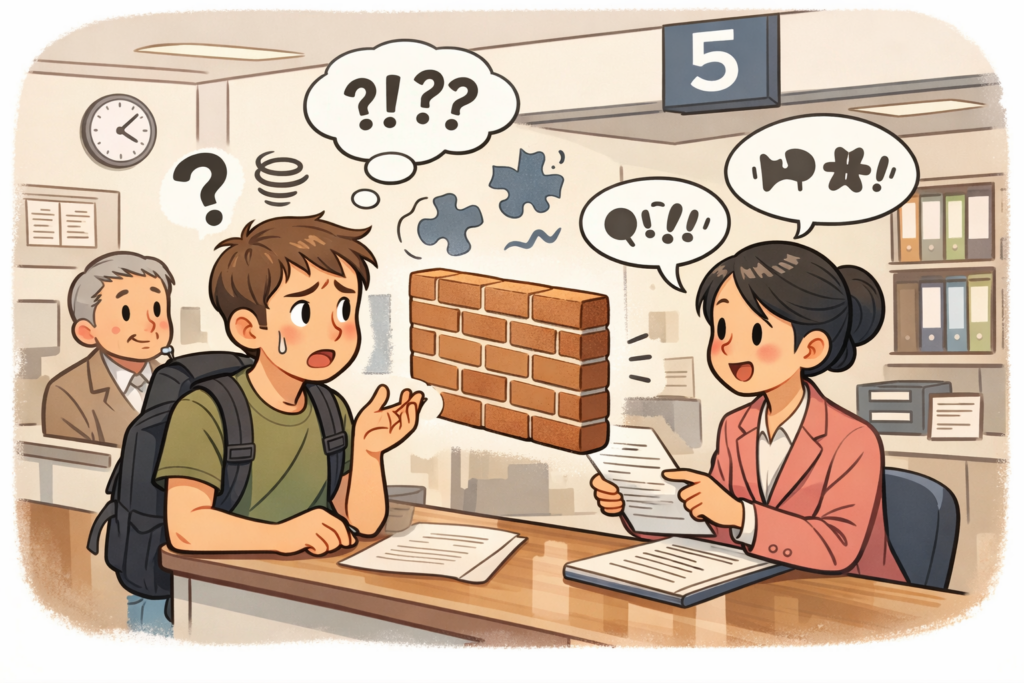
Basic daily life is manageable with limited Japanese. Serious situations are different.
Common pressure points include:
- Medical institutions
- Rental contracts
- City hall procedures
- School communication
Fluency takes time. Preparation does not.
Before you need help, save:
- “English speaking clinic + your area”
- “Your city + foreign resident support”
- “Your prefecture + medical interpreter service”
When something urgent happens, advance preparation makes a major difference.
3. Medical Care in Japan: Understand the System

Unlike countries that require referrals from a general practitioner, Japan allows direct access to specialists.
Common departments:
- 内科 (Internal Medicine)
- 皮膚科 (Dermatology)
- 耳鼻科 (ENT)
- 整形外科 (Orthopedics)
If you are unsure where to go, start with 内科 (Internal Medicine). Most clinics accept walk-ins.
How to Find an English-Speaking Clinic
It is wise to identify one before you need it.
Search:
- “English speaking clinic + your city”
- “English doctor + your area”
- “英語対応 クリニック + your area”
You can also check:
- Your city’s official website under foreign resident support
- Your prefecture’s medical institution search system
If possible, confirm in advance by phone or email:
“Is a doctor available in English?”
Finding medical support while sick is far more stressful than preparing ahead.
4. Administrative Procedures: Respect the Deadlines

For mid- to long-term foreign residents, certain procedures are legally required after moving into a municipality.
After establishing an address, residents must:
• Register their address at the municipal office within 14 days of establishing a residence
• Enroll in National Health Insurance if not covered by employer-based insurance
• Enroll in the National Pension system if aged 20–59 (unless covered by the Employees’ Pension system)
• Report changes, such as address updates, as required
Address registration within 14 days is a legal requirement under Japanese law. While municipalities may handle delays differently in practice, the legal obligation itself is not flexible.
Please note: These requirements generally apply to mid- to long-term residents in Japan. However, eligibility and obligations may vary depending on residency status, employment situation, age, and individual circumstances. Please consult your local municipal office for specific guidance.
When City Halls Are Busy
Expect heavier crowds:
- Mondays
- After national holidays
- Beginning and end of the month
If possible, visit mid-week and arrive soon after opening.
Communication at City Hall
Many municipalities provide translation devices or multilingual support.
If something is unclear, ask for clarification and confirm that you fully understand the instructions.
5. Public Etiquette: Small Rules, Big Impact

Public life in Japan operates through quiet coordination.
Train Manners
On platforms:
- Line up behind platform markings
- Let passengers exit completely before boarding
- Avoid blocking doors
Inside trains:
- Keep conversations low
- Avoid phone calls
- Hold backpacks in front when crowded
Trash Rules
Public trash bins are limited.
You are expected to:
- Take trash home
- Separate garbage according to local rules
Search:
“Your city + garbage separation guide”
Each municipality has its own system.
Conclusion
Japan is not difficult. It is structured.
Most stress comes from:
- Lack of preparation
- Starting at the wrong place
- Assuming English support is automatically available
Understand the system, prepare early, and observe carefully.
Once you understand the structure, daily life becomes far smoother than you might expect.