- Introduction: “I talk to people, but I feel alone”
- Reason 1: Language ability creates invisible distance
- Reason 2: Fewer shared reference points create psychological distance
- Reason 3: Fewer people are naturally outgoing compared to Western countries
- What you can do: realistic advice
- A message from a Japanese perspective(にほんご)
- Final thoughts
A cultural perspective from a Japanese person

Introduction: “I talk to people, but I feel alone”
Many people living in Japan say the same thing:
“I have coworkers. I have classmates. I even have people I hang out with sometimes.
But I don’t feel like I have real friends.”
If you feel this way, you are not strange, and you are not doing something wrong.
In many cases, the reason is not your personality or effort, but cultural and structural differences.
As a Japanese person who regularly talks with people from overseas,
I would like to explain why making friends in Japan can feel so difficult,
and what you can realistically do about it.
Reason 1: Language ability creates invisible distance
If you come to Japan with no Japanese ability, another invisible barrier appears.
Many Japanese people can read and write basic English,
especially simple sentences or familiar words.
However, speaking English is very different.
English education in Japan has traditionally focused on reading and grammar, so:
- Many people understand English passively
- But are not confident speaking it
- They worry about making mistakes or sounding strange
Even among younger people in large cities, where English speakers are more common,
those who can speak fluently and comfortably are fewer than many people expect.
As a result, some Japanese people may:
- Avoid long conversations
- Feel nervous about socializing
- Keep interactions short or superficial
This is not because they are uninterested.
For many people, communicating in English simply feels stressful and exhausting.
When language itself becomes a source of pressure,
people naturally keep social and emotional distance.
Reason 2: Fewer shared reference points create psychological distance
Another important reason is that there are often fewer shared reference points.
For example:
- Native language
- Celebrities and TV shows
- Influencers, singers, or comedians
- Common news and social media topics
Unless someone has a particularly strong interest in foreign cultures,
most Japanese people primarily consume information in Japanese.
As a result, everyday conversations in Japan are heavily influenced by:
- Japanese media
- Japanese entertainment
- Japanese social trends
When someone is not familiar with these references,
casual conversation becomes more difficult.
Both sides may feel:
- Unsure what to talk about
- Afraid of awkward silence
- Mentally tired from explaining too much
This does not mean people are unwilling to connect.
However, when shared background knowledge is limited,
psychological distance tends to form more easily.
Reason 3: Fewer people are naturally outgoing compared to Western countries
Compared to many Western countries, Japan gives the impression that
the proportion of naturally outgoing or highly extroverted people is smaller.
For example, in many Western cultures, it is not unusual for a stranger to say:
- “I love your dress” to a woman walking down the street
- “Do you mind if I sit here?” when a café is getting crowded
These kinds of casual interactions with strangers are often seen as friendly
and socially acceptable.
In Japan, however, entering someone else’s personal or psychological space
is approached with much more caution.
Talking to strangers without a clear reason can be perceived as:
- Intrusive
- Awkward
- Or a violation of personal boundaries
Because of this, many Japanese people avoid initiating conversations
unless there is a clear context or purpose.
This does not mean Japanese people are unfriendly.
Rather, it reflects a cultural tendency to respect personal space
and avoid making others uncomfortable.
As a result, spontaneous interactions that might lead to friendship
simply happen less often.
This is why “context” matters so much in Japan.
When there is a shared place, activity, or purpose,
people feel much safer opening up and starting conversations.
What you can do: realistic advice
Here are a few practical suggestions that work well in Japan.
1. Learn some Japanese — even a little makes a big difference
You do not need to be fluent.
Even basic Japanese can:
- Reduce psychological distance
- Make people feel more relaxed
- Show respect for the culture
When Japanese people feel they do not have to rely only on English,
many become more open and natural.
2. Connect through shared interests
Clear common interests create natural context.
For example:
- Sports
- Music
- Hobbies
- Language exchange
In Japan, doing something together often comes before
talking deeply about personal topics.
Shared activities reduce pressure
and make relationships feel more comfortable on both sides.
3. Join Meetup events
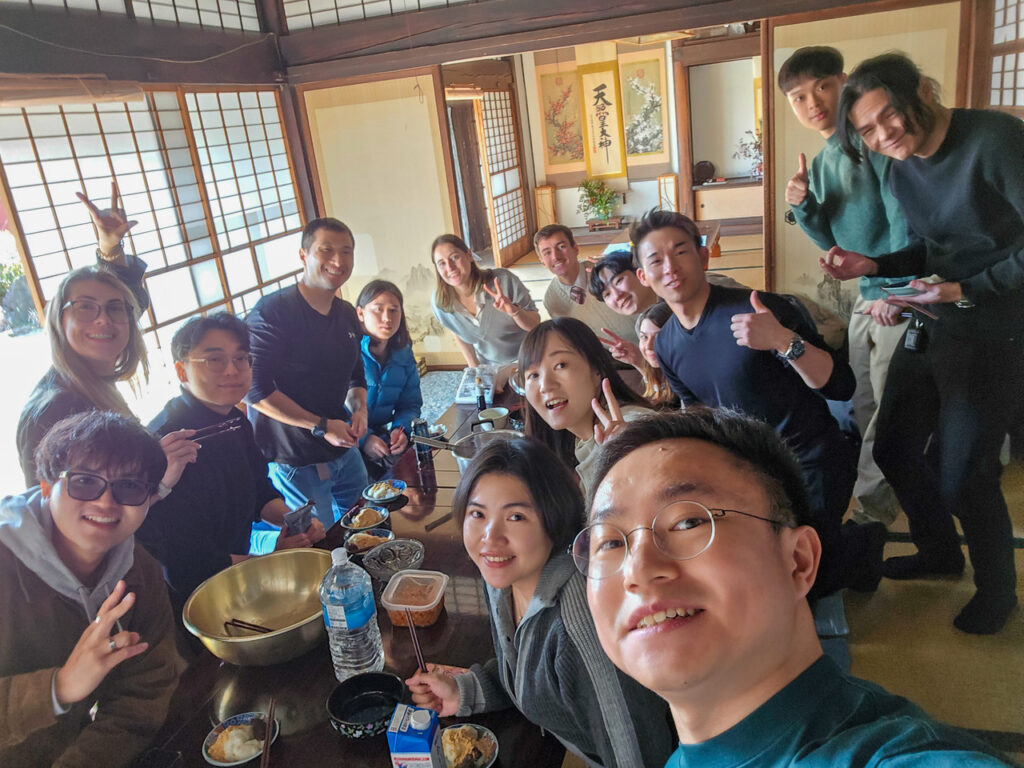
Meetup events provide exactly the kind of context that Japanese people value.
They make it easier to meet:
- Japanese people interested in foreign cultures
- Japanese people who want to connect with people from overseas
- Other foreigners with similar backgrounds and experiences
Because everyone joins with a shared purpose,
starting conversations feels more natural
and less socially risky.
A message from a Japanese perspective(にほんご)
日本人にとって、知らない人に話しかけることは
「勇気がいること」である場合が多いです。
だからこそ、場や共通の目的があると、
安心して人と関わることができます。
時間をかけて同じ場所で関係を続けていけば、
少しずつ距離は縮まっていきます。
Final thoughts
If you feel lonely in Japan, you are not alone.
Understanding language barriers, shared references,
and the importance of context
can completely change how you see people’s behavior.
Friendship in Japan is often slow,
but it can also be deep, sincere, and long-lasting.